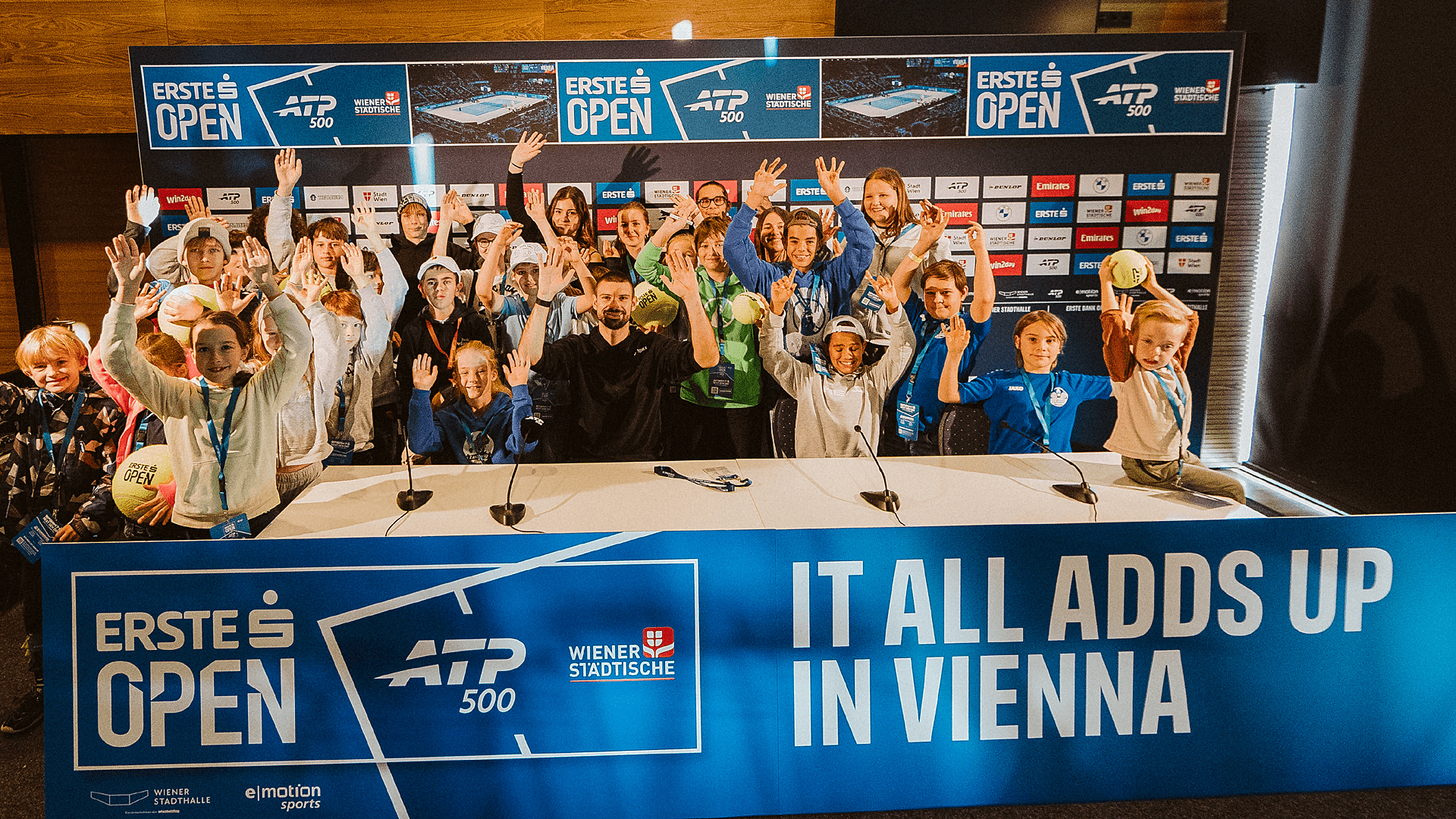
The first thing the young reporters wanted to know was whether Rodionov had prepared well for the press conference. “I’m still feeling good – it depends on the questions,” he replied. It quickly became clear that they were not going to make it easy for him.
One child wanted to know whether Rodionov sometimes smashed his rackets and whether his mother then told him off. “That happened to me as well when I was younger,” the 27-year-old admitted. These days, however, his mother rarely watches his matches: “It is not easy for her emotionally when she sees me making mistakes.”
From a hobby to a profession
Rodionov also told the children about his journey to becoming a professional tennis player. He first picked up a racket at the age of four and began playing tournaments when he was eleven or twelve. By the time he was 14, he was pursuing the sport professionally. What started as a hobby gradually developed into a passion – and eventually became his career.
It is a career that requires plenty of time and dedication: His daily schedule includes three to four hours of tennis practice, another one or two hours of fitness work, as well as massages and recovery. “Officially, I train 24/7 because I live for the sport,” Rodionov explained with a smile.
He ranks Austria’s recent Davis Cup victory over Belgium, in which he contributed two singles wins, among the greatest achievements of his career. He also fondly remembers defeating Denis Shapovalov at the Wiener Stadthalle. “I generally play my best tennis in the Davis Cup. I wish I could do the same on the Tour.”
“Many of us play this sport because of you”
The conversation became particularly heartfelt when Rodionov was asked what it felt like to have fans cheering for him. “It is one of the best feelings in the world,” he said. “I think many of us play this sport because of you – because of the smiles and the fist pumps after a point. We work so hard because we want to inspire people with our tennis.”
Rodionov was equally honest about the difficult moments that come with being a professional athlete. He recalled a defeat in Mauthausen in which he failed to convert seven match points. “That really hurt, especially because it happened at home. But that is part of sport. I think tennis is mentally one of the most difficult sports because you are alone on the court. Even after defeats like that, you have to keep going.”
If he could borrow one quality from another professional, it would therefore be Novak Djokovic’s mental strength: “He is a mental monster and can produce his best tennis in the most difficult situations.”
Nerves and thoughts of dinner
Even Rodionov is not immune to nerves before a big match. “Then I go to the bathroom several times,” he revealed, much to the delight of his young audience. Afterwards, he talks to his team, tries to remain calm and focuses on his strengths.
And what does a tennis professional think about when he is 5–0 down in the deciding set? Rodionov’s spontaneous answer: “What I’m going to have for dinner.” In all seriousness, however, he admitted that it is difficult to remain positive in such a situation.
He has also learned to handle his emotions on court much better. Instead of insulting himself after making a mistake, he now tries to respond constructively: Rather than thinking, “Why did you hit it into the net, you idiot?”, he tells himself, “Next time, hit it higher over the net.”
When asked about his most important role models, Rodionov did not name Roger Federer, Novak Djokovic or Rafael Nadal, but his parents: “Without them, I would not be sitting here today. I am very grateful that they gave me the opportunity to pursue this career.”
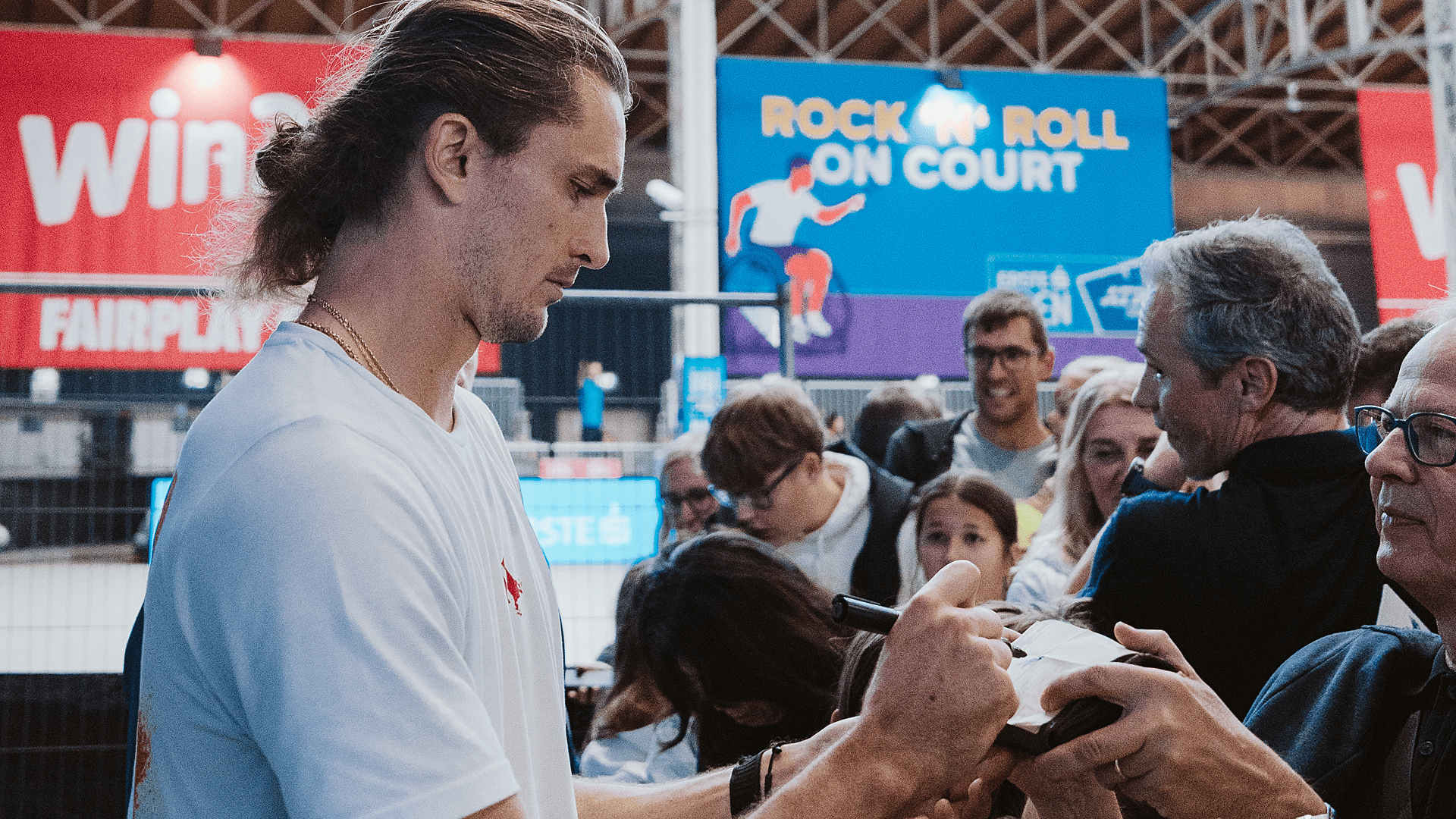
After the final question, Austria’s Davis Cup hero was, of course, happy to fulfil numerous autograph requests – bringing to an end a press conference that was clearly enjoyed by the children and their guest alike.